
Dittany of Crete: A Rare Oil, Five Lab Reports, and a Distiller's Story

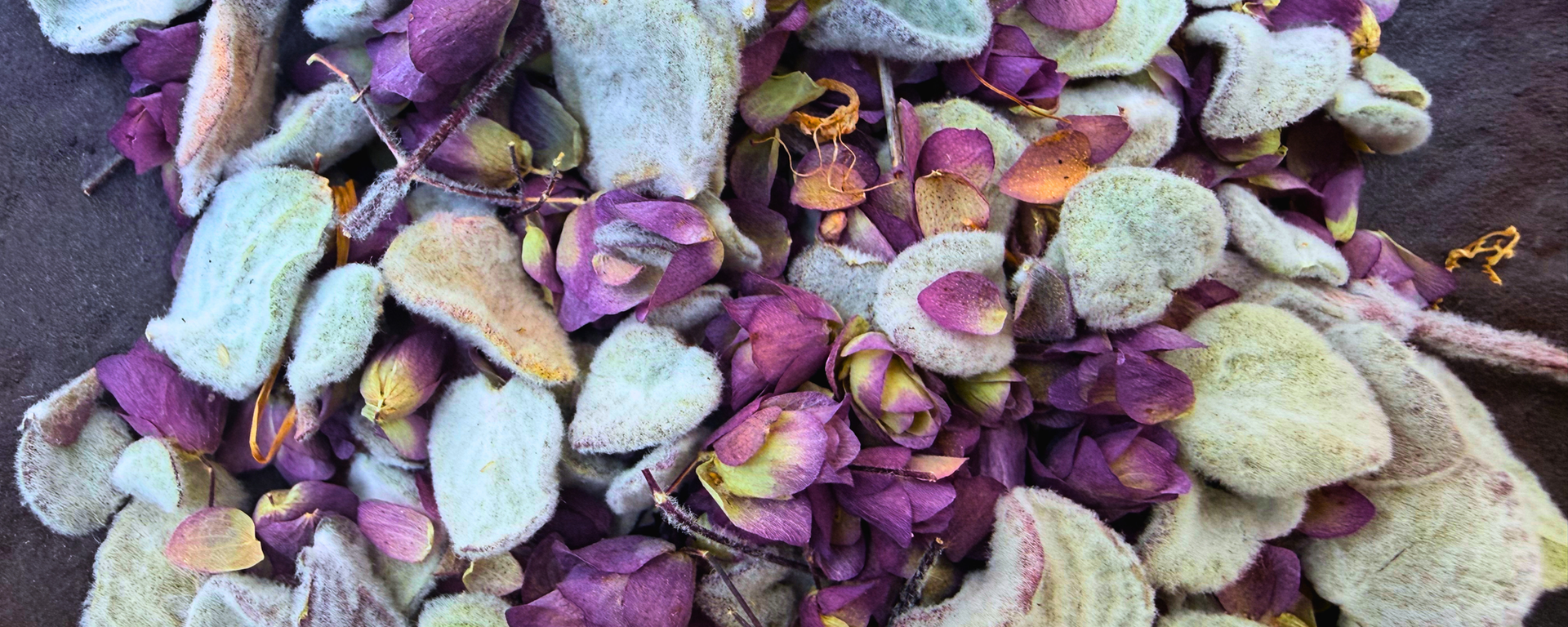
A bottle of Dittany of Crete essential oil is a rare gift. The plant grows only on the island of Crete, its wild populations are protected, and the essential oil is made by a handful of small producers who distill it a few liters at a time, so very little of it ever leaves the island. This summer, a distiller friend on Crete sent us her 2025 harvest, and we were able to run it through a lab.
This article introduces the plant, walks through what the lab reports told us, and explains why the same plant gave us five different oils in five days.
The plant
Dittany of Crete, Origanum dictamnus, is a small perennial shrub in the mint family and a close cousin of oregano. It is endemic to Crete, which means it grows wild nowhere else on earth. In its natural habitat, it is a cliff dweller, rooting in the cracks of limestone rock faces at altitudes up to about 1,900 meters. The leaves are small, rounded, and covered in dense white hairs that give the whole plant a soft, gray-green, velvety look. From summer into autumn, it produces hanging clusters of bracts in shades of pink, rose, and purple.
The plant was named for Diktynna, an ancient Cretan goddess, and it has a long record in classical medicine. Aristotle and Theophrastus both repeated the story of wild goats on Crete seeking out dittany when wounded by arrows, and Hippocrates prescribed it for digestive complaints, rheumatism and conditions of the uterus. Dioscorides used it for soldiers' wounds. In Cretan homes it is still made into a tea, and it has flavored wines and liqueurs since the Middle Ages.
Wild harvesting was once so dangerous that the gatherers, who hung from ropes on cliff faces, were called "erontas," the lovers, because it was said only love could make someone take that risk. Cultivation began in the 1920s, and today almost everything sold comes from cultivated plants. The wild plant is listed as Near Threatened, and its collection is prohibited under the Bern Convention. If you ever buy dittany in any form, it should come from a grower.
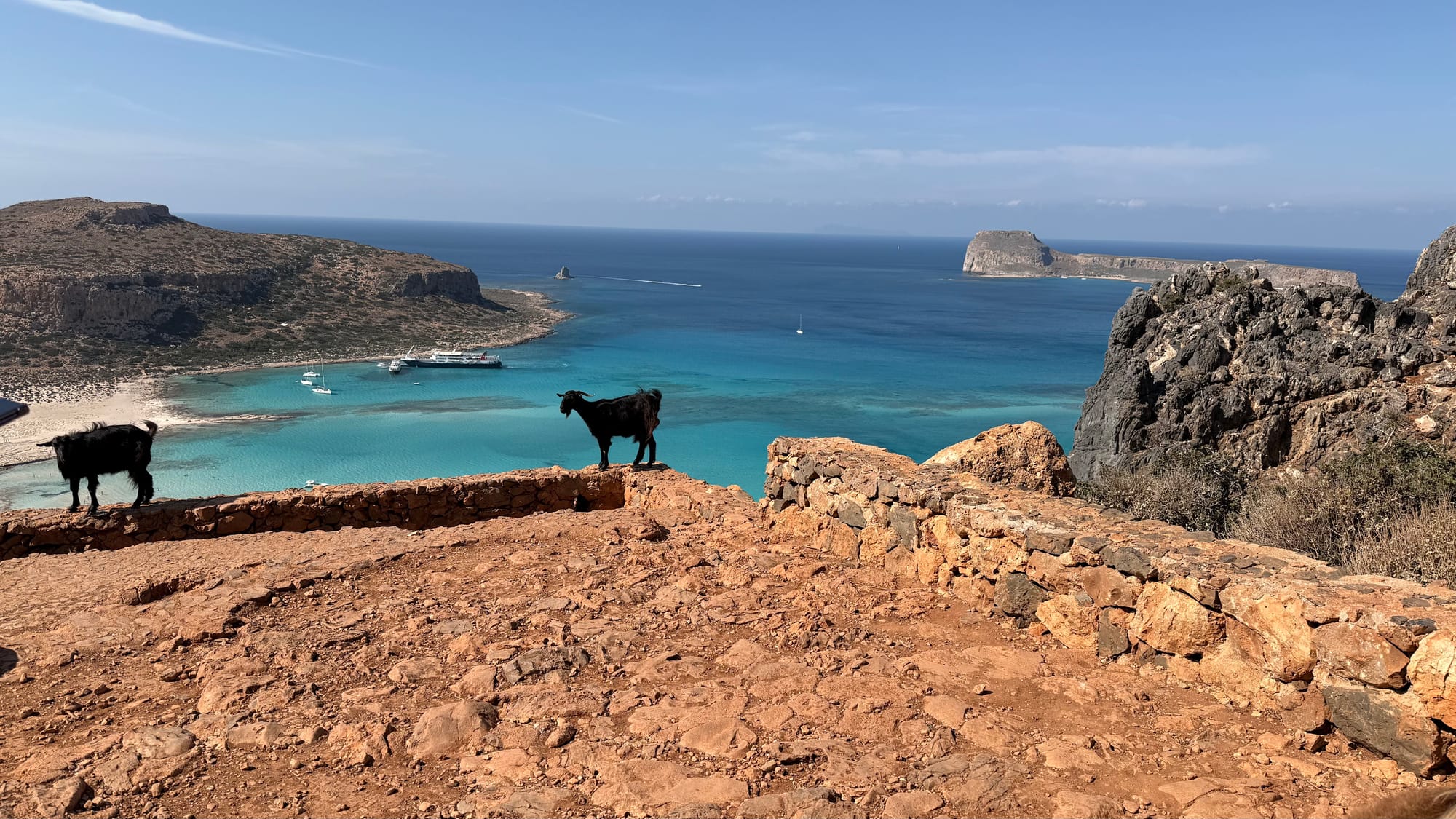
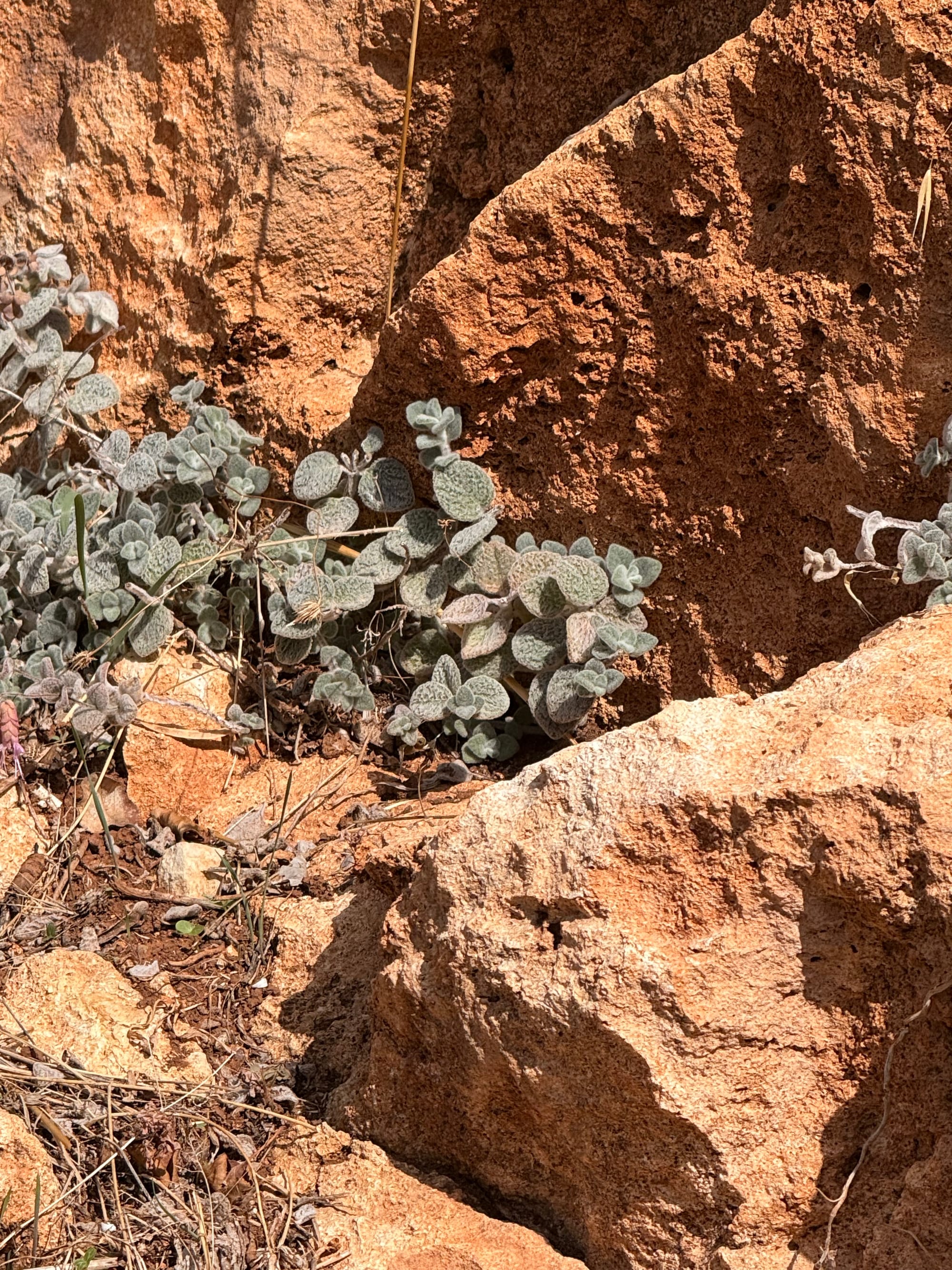
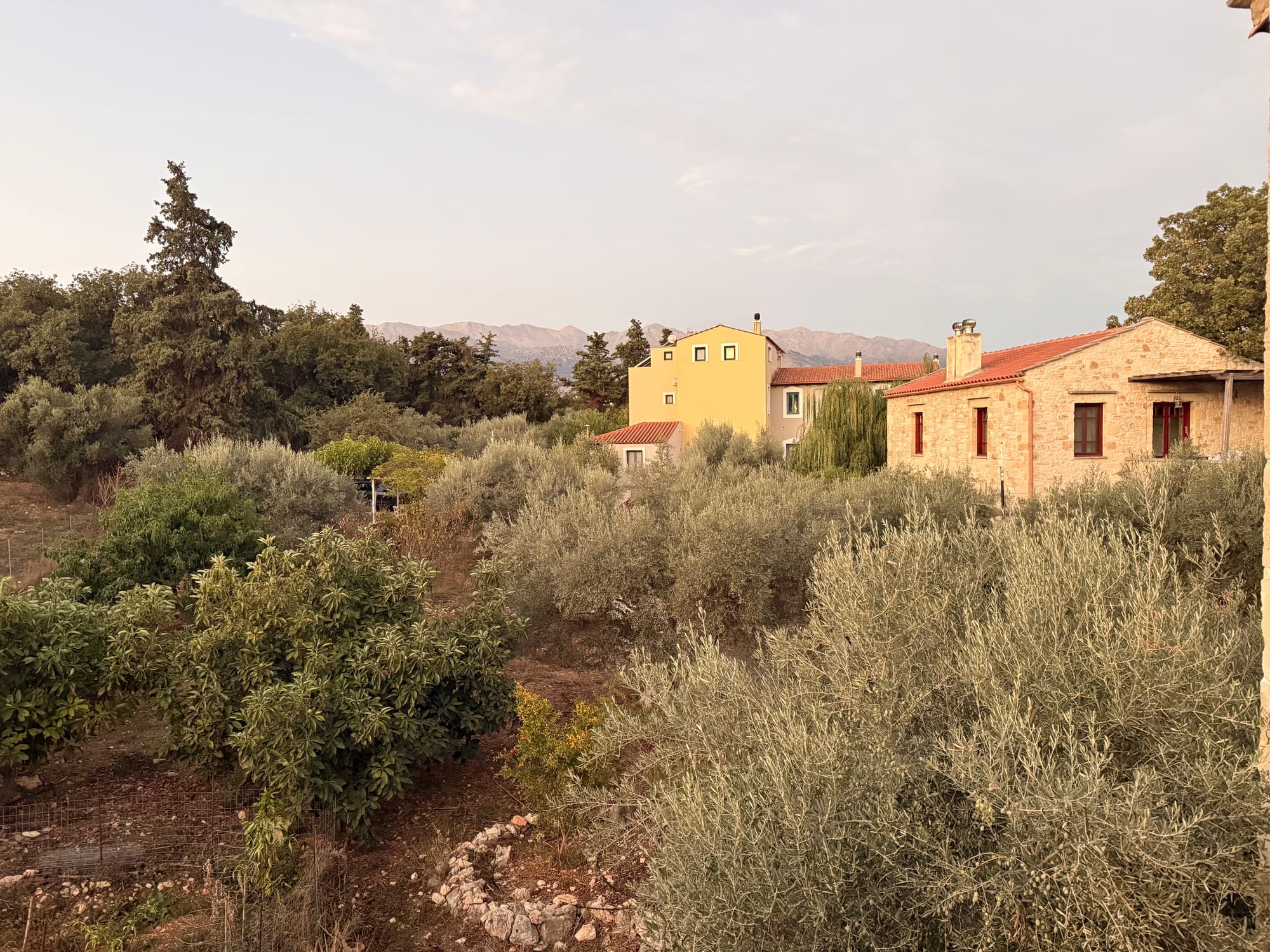
Three views from our time on Crete: black goats above the sea, dittany tucked into the crevices of the limestone, and the olive groves around the place where we stayed.
The distiller
Our oils came from Ildikó Berecz, a Hungarian aromatherapist who lives and distills on Crete with her partner Yiannis Psillos, a grower who planted thousands of dittany plants almost a decade ago, some of them in fields high in the mountains. Ildikó describes the plants as "wild cultivated": grown from seed in the open, on Cretan land, without the protection a garden would give them, and harvested by hand, piece by piece.
She distills in copper. Her log for 2025 shows four runs between 26 and 30 August from plants harvested on 17 and 20 August and dried for seven to ten days. The yields ran between roughly 2.5 and 3 percent of the dried plant weight, which is a generous yield for an aromatic herb and explains why the oil is possible to make at all on such a small scale.
Ildikó's own description of the scent is better than anything I could write. Compared with her carvacrol-rich thyme, which she calls "harshly strong like a crude vinegar, but fiery," she says dittany oil:
Echoes the soil, the grey-blue velvety leaves, its earthy, smokey character for the first approach. When you keep inhaling, it will show the deeper layers of true power and warn you: handle with care.
The oil itself is a striking deep red-orange.
What the lab found
We sent five samples to Essential Validation Services in Colorado for GC-MS analysis. All five passed as genuine Origanum dictamnus with no adulterants, diluents, or contaminants detected, and each report identified between 69 and 83 individual compounds.
Four of the five samples look very much like each other. The fifth is where the story gets interesting, so I will come to it separately.
The four whole-distillation samples
The picture is consistent. Carvacrol, a phenol, makes up somewhere between a third and 40 percent of the oil. The monoterpenes gamma-terpinene and para-cymene together account for another third. Linalool, a gentle monoterpenol most of us know from lavender, sits at around 5 percent. Thymol, carvacrol's isomer and the dominant molecule in many thyme oils, is almost absent. These are carvacrol-type oils through and through.
That profile places dittany squarely alongside the other strong aromatic herbs of Crete: oregano, Origanum onites; Cretan thyme, Thymbra capitata; and the savories. Ildikó calls these the "antibacterial hotshots" of the island. What sets this dittany apart is the proportion. Published studies of dittany oil have reported carvacrol anywhere from about 50 percent up to 82 percent, and the widely cited 2015 study by Mitropoulou and colleagues found 52 percent. Ildikó's oils come in noticeably lower, around 40 percent, with correspondingly more gamma-terpinene and para-cymene. Her reading, and I agree with it, is that this makes for a more rounded oil, still unmistakably a phenol-rich oil but a little less blunt than the numbers in the literature would lead you to expect. Whether the difference comes mainly from her slower copper distillation, from the particular plants, the altitude, the harvest timing, or all of these together is a question she is keen to keep exploring.
Why does the same plant give five different oils?
This is the part of the reports that excited both of us most, because it is a rare chance to see distillation choices written out in numbers.
Hydrodistillation versus water and steam. Three of the runs were whole distillations of the same harvest. Two were water-and-steam distillations, where the plant sits on a grid above the boiling water. One, on 27 August, was a hydrodistillation, where the plant material sits in the water itself. The hydrodistilled oil came out with the lowest carvacrol of the three and slightly more gamma-terpinene, para-cymene, and linalool. The difference is a few percentage points, which is small, but it runs in the direction Ildikó predicted, and she suspects the trend would continue toward higher carvacrol in a pure steam distillation.
Early oil and late oil. On 29 August, Ildikó did something distillers rarely have the chance to analyze. She collected the oil in two fractions: the first 37 ml that came over, and then the last 15 ml. The lab ran them separately.
The second fraction has almost double the carvacrol of the first. The light, volatile monoterpenes, which come over early, have largely gone, and the heavier sesquiterpenes and their oxides have crept up. If you combine the two fractions in proportion to their volumes, the whole 29 August oil works out at roughly 43 percent carvacrol, which puts it right back in line with the other three runs. Nothing was gained or lost. It was simply separated in time.
Why does that happen? Some molecules are lighter and more volatile, so they run faster. They reach the condenser first and come over earlier. Others are heavier and less volatile, so they take longer and come over later. Distillation is a little like a race. When heat is applied, the most volatile components are the first to cross the finish line, followed by progressively less volatile ones. The molecules sort themselves by their volatility and boiling behavior, and the two fractions are simply the front and the back of that race caught in separate bottles.
For anyone who has ever wondered what "the first drops" of a distillation smell like compared with the end, here it is in numbers. The early oil is brighter, greener, and softer, with the most linalool of any sample. The late oil is dense, hot, and phenolic. Ildikó also points out that these molecules are neighbors on the same pathway inside the plant. The plant makes carvacrol and para-cymene from the same starting molecule, gamma-terpinene. Seeing them rise and fall against each other across the reports is like watching that relationship on paper.
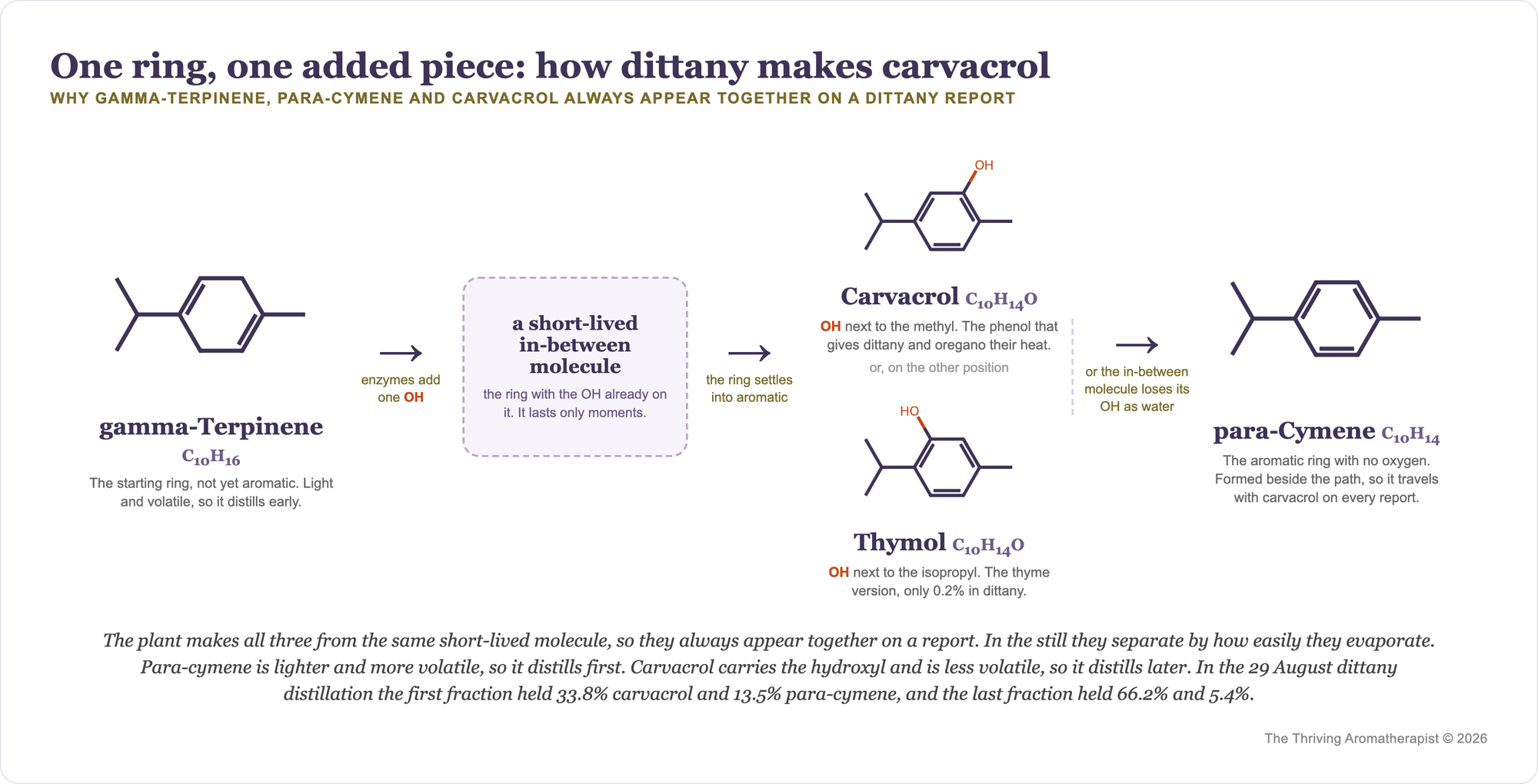
An interesting find. If you have ever wondered how three molecules can be “neighbors,” this is how they are related.
Para-cymene is a simple aromatic ring with two small side groups attached, a methyl and an isopropyl. Add a hydroxyl group (one oxygen and one hydrogen) to that ring and you have carvacrol. Add it one position over and you have thymol instead. Same ring, same side groups, one added piece.
The plant makes all three from gamma-terpinene. Its enzymes add the hydroxyl to gamma-terpinene, and the ring then settles into carvacrol, or into thymol when the hydroxyl sits on the other position. Para-cymene forms beside that path, when the short-lived in-between molecule loses its hydroxyl as water. For many years textbooks drew para-cymene as the middle step. Enzyme research published in 2021 showed this route, and it is the one we teach. That is why the three are always found together in dittany, and why their balance changes from one harvest to the next.
The still is a different story. Nothing is converted there. Para-cymene is lighter and distills first, so it fills the first fraction. Carvacrol carries the hydroxyl, is heavier, and distills later, so it collects in the second.
What the chemistry suggests for use
There is very little aromatherapy research on dittany specifically, and most of what we can say comes from its major constituents and from its Cretan relatives.
Carvacrol is one of the most studied antimicrobial molecules in our field. Laboratory work on dittany oil has shown activity against a broad range of bacteria and fungi, including Staphylococcus aureus, Escherichia coli, Candida albicans, and Aspergillus niger, at concentrations comparable to oregano oil. Carvacrol is also a strong antioxidant and has anti-inflammatory activity in laboratory models. Para-cymene contributes antimicrobial activity of its own and has been studied for its effect on pain perception. Linalool at 5 percent brings a calming, softening note that most oregano oils lack.
So the therapeutic picture is the one you would expect: a warming, strongly antimicrobial oil with potential for respiratory infections, for skin and nail fungal conditions, for muscular aches, and in very small amounts as a component of immune-support blends.
The traditional uses go wider than that, and Ildikó's article lays them out in detail: digestive complaints, headache, sore throat, wound healing, and a long history as a women's herb for bringing on menstruation and easing labor. Those traditional uses were mostly of the tea, the tincture or the crushed herb.
A personal note on that tea. Along with the oil, Ildikó sent me a bundle of the dried herb, the very same plant you see in the header image. Twice this year I felt a cold coming on, and both times I steeped the dittany into a tea. It is delicious, soft and warming with none of the harshness you might expect from a plant this rich in carvacrol, and both times the cold never arrived. I cannot claim cause and effect from two cups of tea, but I understand why Cretan households have kept a jar of diktamos on the shelf for a very long time.
Safety
Treat dittany exactly as you would treat oregano or a carvacrol-rich thyme.
- It is a skin irritant and a mucous membrane irritant. Keep dermal dilutions low, around 1 percent or less, and always use a carrier. Carvacrol, if not diluted, can leave a burn on your skin.
- Only diffuse in a well-ventilated room and for short periods of time, and keep it well away from the eyes. Ildikó notes it can sting the eyes even when inhaled undiluted from the bottle.
- Avoid it during pregnancy. The herb has a traditional reputation as an emmenagogue and was historically used to hasten childbirth. There is no research on the oil in pregnancy, and that is reason enough.
- Carvacrol-rich oils may interact with anticoagulant and antiplatelet medications and may affect how some drugs are metabolized. If a client takes those medications, choose something else.
- Not for children, and not for internal use.
Further reading
Ildikó has kindly let me share her full article with you. It is the source for much of the history and ethnobotany above, and her photographs of the plant on its cliffs are worth the download on their own.
To read more from Ildikó and from the wider community of aromatherapists writing across the world, look for Aromatika, the quarterly aromatherapy journal published in Europe in the English language. Its contributors come from Australia, Africa, aromatic islands like Madagascar, and North and South America, and this year, a growing number of exciting contributions have come from Asian countries too. Single issues and subscriptions are at aromatikamagazine.com, and the Winter 2024 issue with this article is here. Ildikó's own writing, retreats, and distillation work are at essentialreflections.com and on Instagram at @essentialreflections.
References
Berecz, I. (2024). Dittany of Crete: The magic spell to expel. Aromatika, 11(4), 6 to 15.
Krause, S. T., Liao, P., Crocoll, C., Boachon, B., Förster, C., Leidecker, F., Wiese, N., Zhao, D., Wood, J. C., Buell, C. R., Gershenzon, J., Dudareva, N., and Degenhardt, J. (2021). The biosynthesis of thymol, carvacrol, and thymohydroquinone in Lamiaceae proceeds via cytochrome P450s and a short-chain dehydrogenase. Proceedings of the National Academy of Sciences, 118(52), e2110092118.
Liolios, C. C., Graikou, K., Skaltsa, E., & Chinou, I. (2010). Dittany of Crete: A botanical and ethnopharmacological review. Journal of Ethnopharmacology, 131(2), 229 to 241.
Mitropoulou, G., Fitsiou, E., Stavropoulou, E., Papavassilopoulou, E., Vamvakias, M., Pappa, A., Oreopoulou, A., & Kourkoutas, Y. (2015). Composition, antimicrobial, antioxidant, and antiproliferative activity of Origanum dictamnus (dittany) essential oil. Microbial Ecology in Health and Disease, 26.
Solomou, A. D., Fountouli, A., Molla, A., Petrakis, M., Manolikaki, I., & Skoufogianni, E. (2024). Ecology, cultivation, and utilization of the Dittany of Crete (Origanum dictamnus L.) from ancient times to the present: A short review. Agronomy, 14(5), 1066.

Member discussion